- sex
- Posts
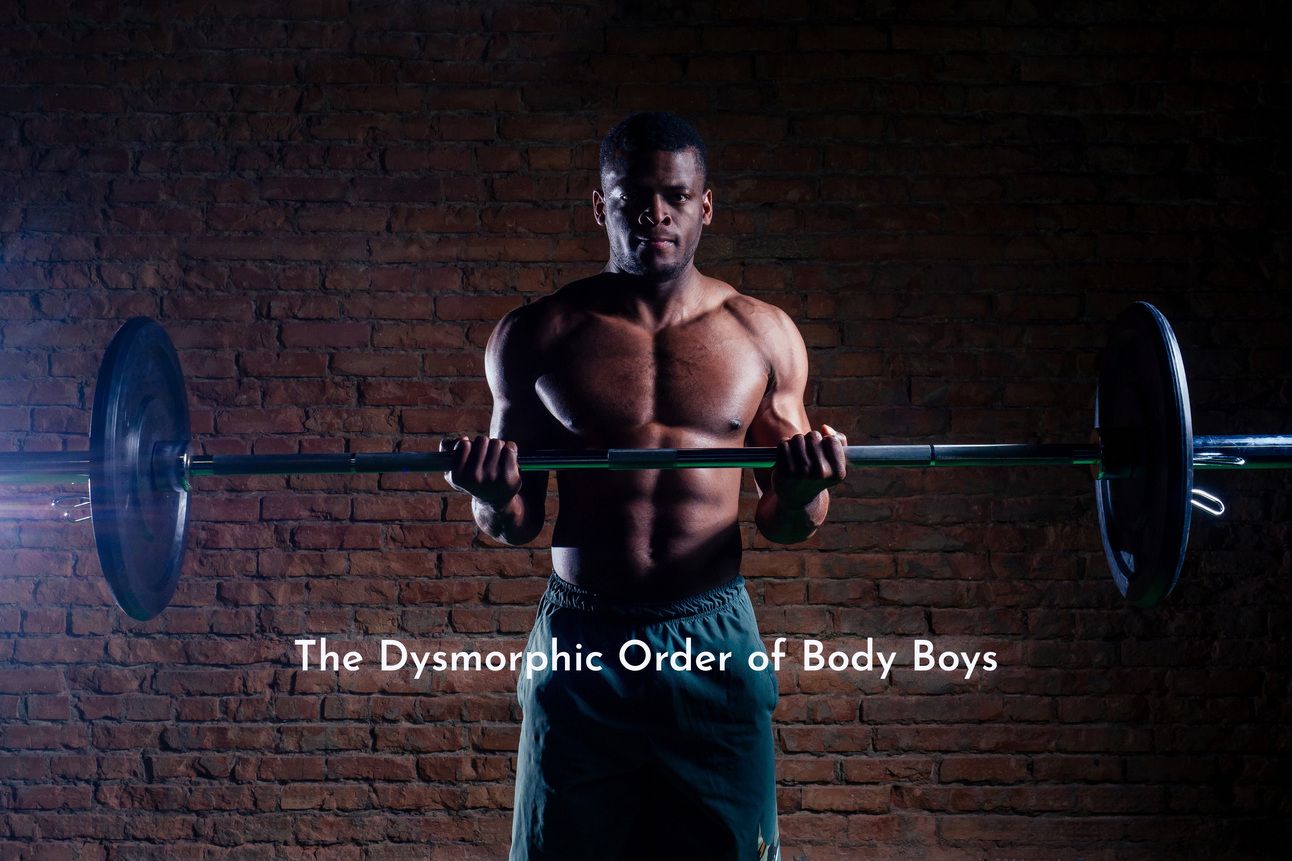
- The Dysmorphic Order of Body Boys
The Dysmorphic Order of Body Boys
You just might qualify for a brand new mental health disorder!

Garco B
May 14, 2025
In partnership with

In 2019, researchers published a paper detailing a link between body dysmorphic disorder and social media use, which also suggested a preoccupation with muscularity could be classified as a disorder. I quickly realized that my daily gym routines, my deliberately high calorie eating habits, and my unending goal for a muscular body type fell squarely into the symptomatology of body dysmorphic disorder. Although I never received a clinical diagnosis, believing even for a little while that I could have an eating disorder was enough for me to address the obsession and correct my behavior.
Pop culture has defined the ideal body type for both men and women for as long as I've been alive, and certainly before my time here. I realized in high school that my six foot one inch, one hundred fifty five pound frame was well below the expectation of the ideal man, weight-wise. That's when the weight training started. It took nearly a decade for me to get to a place where I felt satisfied with how I looked physically, and that satisfaction happened to coincide with the rise of one well known social media app–Instagram.
At first, this was a platform I thrived on. Despite efforts to remain low key and center my online presence around a few close friends, I gained a modest following pretty quickly, thanks in no small part to my physique. This was comfortable for me. I invested virtually zero time into deliberately growing my account–that happened organically–however, in the later half of the 2010s, I noticed the social media landscape starting to change.
The Loudening Storm
It happened gradually. A wave of fitness influencers exploded onto the scene, most of whom had physiques that raised the bar of what it meant to have a "nice body" by societal standards. Competing for likes slowly became less casual and more intentional, which of course translated into more gym time, a stricter eating regimen, and developing photography skills slightly above the par of the average smartphone user. And guess what? It wasn't enough. Social media's fit community was quickly outpaced by a new breed of fitness influencer, and try as we might, trying to compete could come at a psychological and a physical cost.
Around this time, some close friends started making me aware of the prevalence of performance enhancement drugs (PEDs)–colloquially known as gear, "supplements", anabolic steroids, or a small variety of similar names. As I became personally acquainted with dealers and users at many different stages of their fitness journeys, learning how to spot the telltale signs of an enhanced body became second nature. The most surprising part? These drugs were everywhere.
I began to recognize that my explore page was littered with bodies that simply could not be achieved by natural means. It quickly became clear to me that everyone in the fitness community wasn't playing the same rules. This led to some early enmity, though as time went on, I realized that these people must also have fallen victim to the naturally unachievable body standards that Instagram was presenting to us daily. They found an assured path to a boost in likes, followers, body mass, confidence, and sexual interests. It felt unfair then, but with the assortment of knowledge I'd gained from peers in the community, I understood that I had to make a choice about how I would proceed. I wanted the body and the likes, but I also wanted to do what would be best for my mental and physical health in the long term.
The Deciding Factors
I did my research, and through that, learned that the research on performance enhancement drugs was scant at best. Essentially, the person using them is the guinea pig. If you have even a passing knowledge of the approval process that all drugs take before hitting the shelves in this country, you likely know that testing can go on for years and involve thousands of participants. Side effects incurred are carefully tracked and, more often than the contrary, most drugs submitted to the FDA for approval do not meet the safety standards necessary to pass.
Of the few people who were open with me about using these drugs, a majority of them experienced rare, potentially side effects that were otherwise uncommon in our peer group. I’m not a doctor, so I can’t say how or why that happened, but because they each had this one thing in common, I formed my own conclusion about the safety of performance enhancement drugs. So that option was out.
I could leave Instagram altogether, but by this point, I had developed multiple close relationships with people who I met and regularly interacted with on the platform. Plus, beyond the bombardment of unattainable body standards, Instagram was both fun and useful for other reasons. I intended to stay, but how I used that and other social media apps would undergo drastic changes.
A Change in Habits
I love my body (today), but that sentiment is a tenuous one. Over the course of the last five years, I developed habits that I now know contribute to a deeper and more continuous love for my physical self that could not be shaken by any number (or dearth) of likes. These are those habits.
1. Muting most people with naturally unattainable physiques from my social media feeds.
This may be controversial to admit. As a part of a larger fitness community, I inevitably encounter and befriend people who use PEDs and/or photo altering tools for the expressed purpose of gaining a following on social media. Regardless of how I personally feel about their methods, the fact of the matter is that it works. An overwhelming majority of people on social media love enhanced bodies. I needed to let them have their shine in a way that does not contribute to my symptoms of body dysmorphic disorder.
Yes, they've raised the bar for what it means to have a "nice body," but I realized that I could simply ignore that bar to protect the satisfaction I have with myself. Now, my feeds recommend far fewer people who are noticeably enhanced, so they've become less prevalent in my online life and completely absent from my eating or exercise habits. People who simply workout and eat well to attain the bodies they want are all fair game.
2. Alter my workouts to focus on performance, rather than an aesthetic.
This is equally as important. The period of my life where I focused explicitly on higher likes or more followers directly coincided with the symptoms I displayed of body dysmorphic disorder. Now, rather than aiming for a certain look, I orient my workouts and eating habits toward reaching performance goals.
Usually, that's being able to lift a certain amount of weight or sprint for a particular length of time. These personal records do often translate into a body that is more aesthetically pleasing, but changing the goal from a subjective look to a perfectly achievable number on a machine, means that success and satisfaction are always well within reach.
3. Acknowledge which of my goals are being serviced by being in good shape.
There are many reasons why someone would want to be in peak physical form, but mine are relatively simple.
The first is good sex. Although aesthetics play a major role here, confidence is the biggest factor. The increased strength and stamina that comes along with it are enough of an incentive to keep my fitness level up to par.
The second is remaining in good health. My family has a deep history of heart disease–a spike in my cholesterol levels at just 16 is what prompted me to correct my eating habits in the first place. So eating well and exercising will hopefully keep me out of the hospital for good.
Finally, because I do generally love the way I look, I frequently contribute to campaigns that highlight my physique. These periods are short lived–weeks-long at best, and once the campaign is over with, I go right back to focusing exclusively on performance goals.
Same Body, Better Brain
Hopefully this doesn’t look or sound like a slight to anyone in the overall fitness community. My stance on drugs has not changed–education is always more helpful than condemnation, and pretending this doesn’t exist is of no use to anyone. My hope is that, from the stance of what many people may perceive as a “body boy,” I can offer some guidance that helps others feel better about themselves and choose paths that lend themselves toward better outward and inward health.
The Daily Newsletter for Intellectually Curious Readers

Join over 4 million Americans who start their day with 1440 – your daily digest for unbiased, fact-centric news. From politics to sports, we cover it all by analyzing over 100 sources. Our concise, 5-minute read lands in your inbox each morning at no cost. Experience news without the noise; let 1440 help you make up your own mind. Sign up now and invite your friends and family to be part of the informed.
Reply